
Time: 2026.03.10
Published: 2026-03-10 | Global Robotics & Embodied AI Industry News
AW 2026 in Seoul witnesses humanoid robots shifting from laboratory research to practical industrial scenarios. Multiple Chinese robotic enterprises jointly display core technologies to promote large-scale popularization of embodied AI.
Humanoid robot group performances have fully demonstrated great progress in motion control technology, which also drives humanoid robots to become core highlights at Smart Factory & Automation World 2026 held in Seoul. This exhibition marks the first collective overseas appearance of many leading Chinese humanoid robot brands including AGIBOT, Fourier Intelligence, Leju Robotics, Unitree Robotics and Huawei.
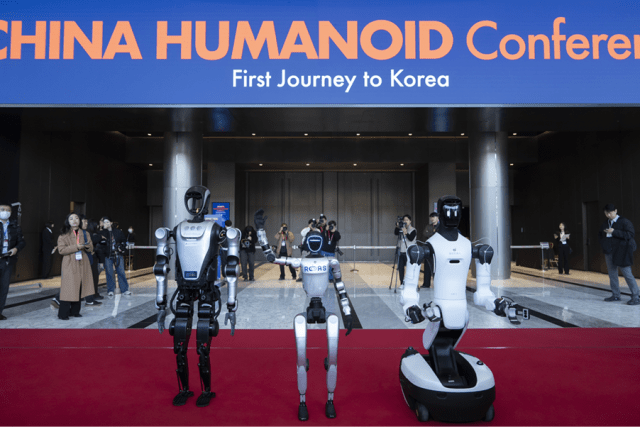
Figure: Five leading Chinese humanoid robot brands debut in South Korea collectively (Source: AW 2026 Official)
Modern humanoid robots have evolved from simple mechanical equipment into integrated heterogeneous computing platforms integrating hardware structure, AI models, multi-sensor perception and cloud collaboration. As AI keeps integrating with physical scenes, embodied AI capable of real-world interaction has become a core trend of next-generation artificial intelligence.
During the in-depth industry forum held alongside the exhibition, experts reached a consensus that embodied AI is transforming from algorithm-oriented research to systematic engineering technology with complete perception, decision-making and execution capabilities. Meanwhile, the whole industry is actively exploring effective solutions to break through multiple practical engineering bottlenecks.
The core driving force for the rapid iteration of humanoid robots comes from the continuous operation of data flywheel. The closed loop composed of hardware equipment, real scene data and intelligent algorithms enables robots to continuously collect environmental perception data for model training. Optimized AI models further upgrade robot operation ability, expand applicable scenarios and generate richer data resources.
In terms of control architecture, the industry generally adopts brain-cerebellum hierarchical control mode. The brain undertakes high-level task planning, logical analysis and decision making, while the cerebellum is responsible for low-delay stable motion control such as walking balance and joint coordination. Huawei further builds end-edge-cloud three-level collaborative computing system via R2C protocol to reasonably allocate computing pressure.
Fine physical manipulation represented by flexible grabbing has become the key technical difficulty restricting embodied AI landing. Industry insiders stated that single visual guidance can no longer meet complex operation demands, and full-body tactile sensing and force feedback technology must be combined to form complete closed-loop perception control system.
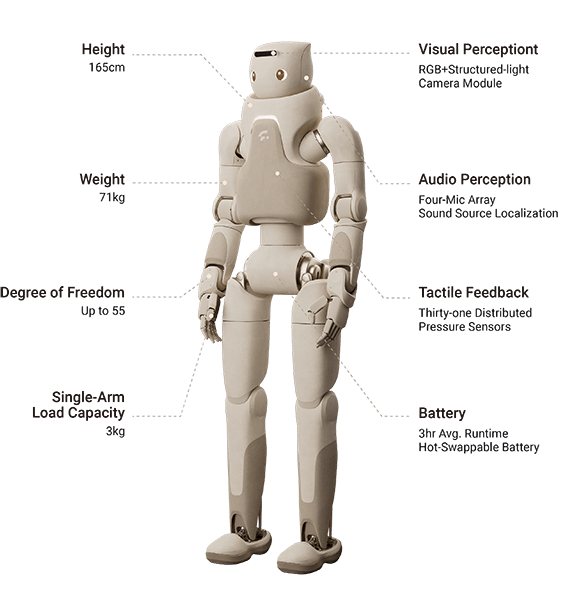
Figure: Fourier GR-3 humanoid robot with full-body tactile sensing design (Source: Fourier Intelligence Official)
In actual industrial landing practice, enterprises focus on improving core engineering indicators including operational stability, continuous working hours and failure-free operation cycle. Many mass-produced humanoid products have achieved long-hour stable operation and ultra-low delay remote control, effectively filling the unstandardized operation gaps in traditional industrial automation production lines.
From core motion control, multi-modal sensor fusion to high-performance driver design, a complete industrial supporting ecosystem for humanoid robots is taking shape. With continuous upgrading of hardware performance and AI algorithm capability, humanoid robots are expected to become another mainstream intelligent hardware platform after smart phones and autonomous driving equipment.
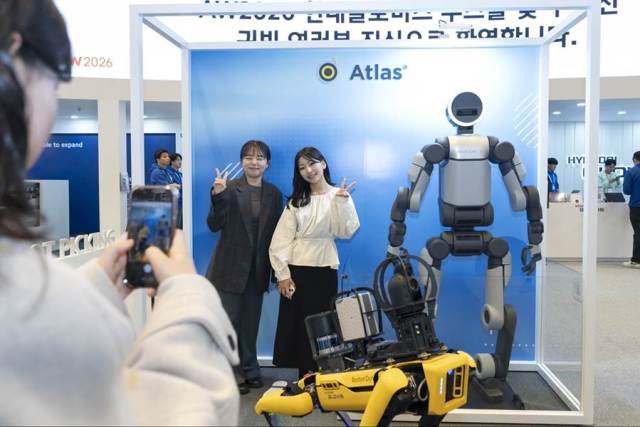
Figure: Boston Dynamics Atlas humanoid robot makes appearance at AW 2026 (Source: AW 2026 Official)
At present, the whole industry has entered the critical stage from technology demonstration to large-scale industrial application. Relying on joint efforts of global enterprises and continuous breakthroughs in underlying technology, embodied AI will be widely applied in industry, family services and many other fields in the next decade.